
Making rennet: the Caillette method used at Jasper Hill
Thoughts on the increased relevancy of rennet economics and controversy.

Entering the last week before Cheese Trekking is let out to pasture on March 3rd, I am on tour, promoting the book and reconnecting with the cheese community of the US. The Northeast leg is done, now I’m onto CA in March. I had become a bit removed from what’s happening on the ground, the realities facing dairy farmers, artisan cheesemakers, and mongers in the US. An unforeseen side effect of coming up to Vermont to speak at events and stay with friends old and new is that I’m placing my finger back on the pulse of American cheese. My knowledge of cheese science and technique is expanding, simultaneous with my bringing the findings and stories of my travels back to the campfire where my passion for the craft was sparked and kindled.
Rennet is Relevant
Every time I start talking about rennet, I see attentive faces. The conversation around the lack of domestic rennet production in the US has become increasingly relevant in recent years, with concerns along with confusion over FPC and its origins exploding on social media alongside fierce raw milk partisanship. In this piece I’ll discuss a vanguard effort of in-house rennet making in America. This builds on the research I did in 2022 for a DZTA scholarship. Before reading this post, I suggest looking over a visit to Cuajos Caporal, and Types of Rennet.
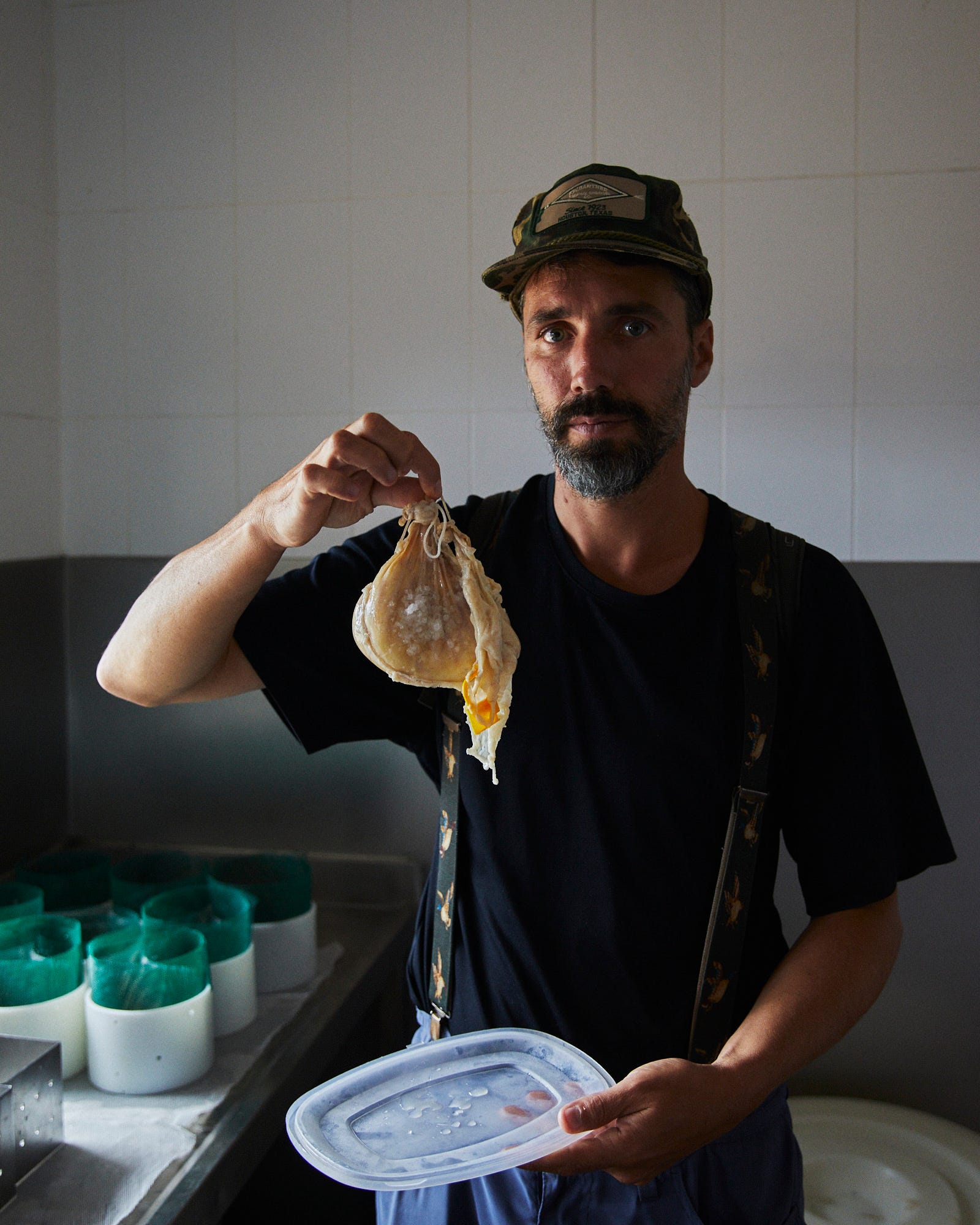
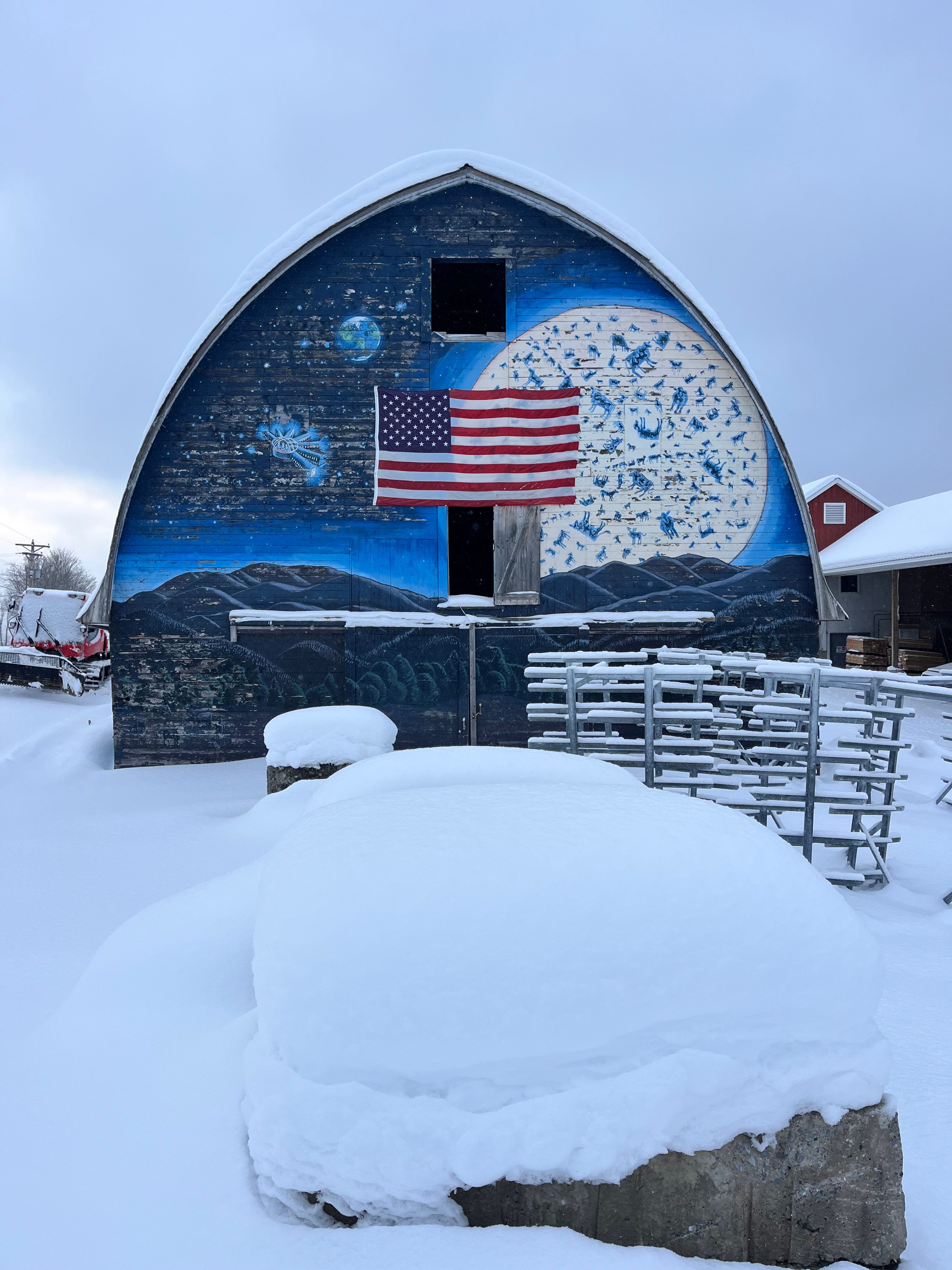
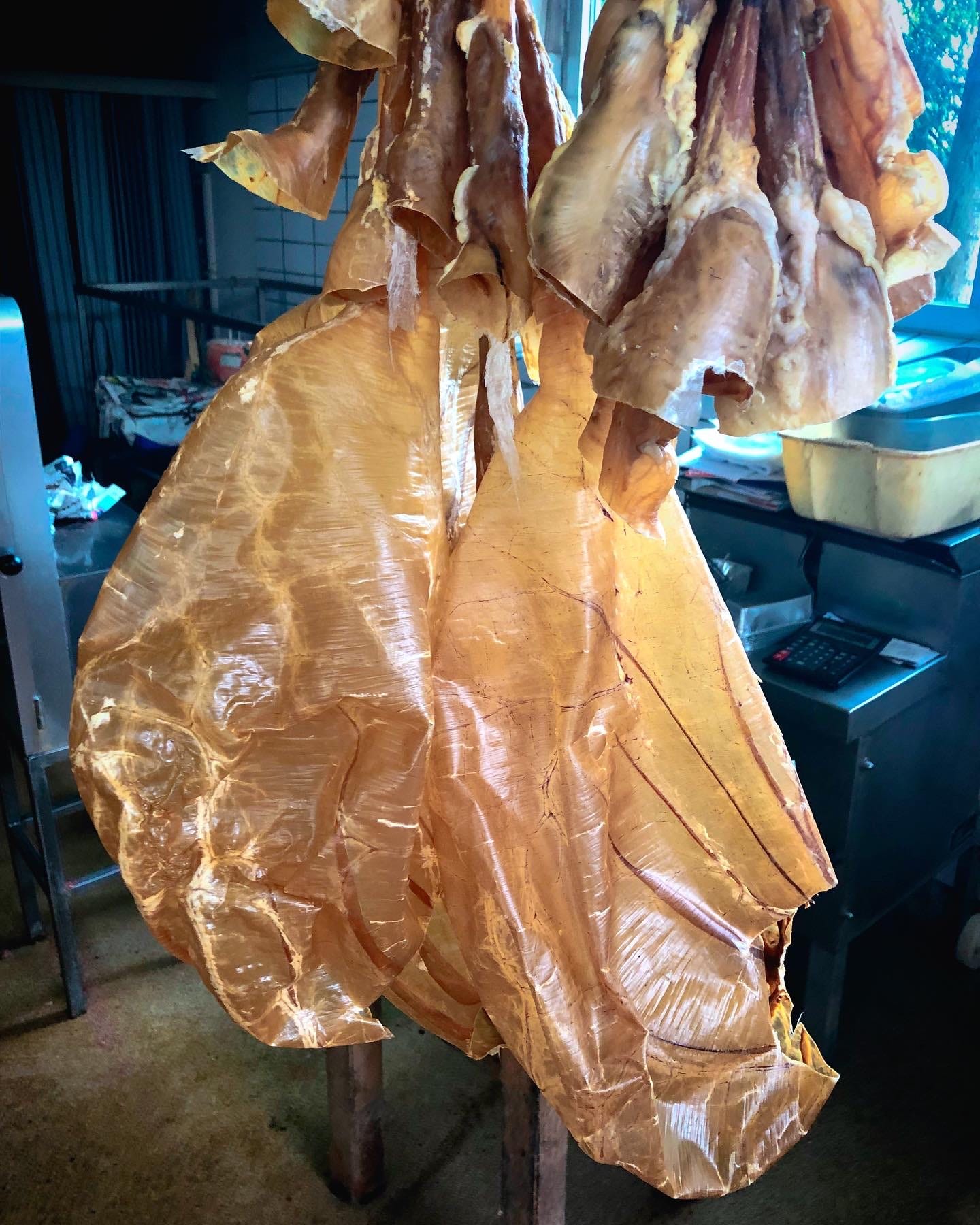
With the price of imported liquid animal rennet increasing and the global supply being cornered by large companies, an impetus is emerging for US cheesemakers to learn how the raw material may be sourced and made into rennet. I know of two companies operating at different scales in Vermont that are serving a vanguard role of working with imported dry abomasa (vells), transforming them into the rennet used in some of their cheeses. A recent week spent at Jasper Hill Farm allowed me to learn about a technique that could be replicated by other cheesemakers, which the company is happy to share.
I was familiar with the first half of this technique. I have been following and teaching it at my workshops, in a much cruder, less controlled manner. I never relied on the rustic rennet made by steeping lamb abomasa in sour whey as an active starter, I would just make a batch and use until depleted, then start a fresh batch. The method I saw at Jasper Hill carries it farther. It is based on one used by Beaufort producers in France, and similar approaches are applied in other alpine cheeses such as Comte, and the Gebsenkäse of Anton Sutturlüty in Austria. Known as caillette, the method produces a liquid rennet which is also a continuous heirloom culture that is regularly replenished to maintain a highly active whey starter, plus microbial and enzymatic inputs from the vells.
The Caillette method.
1. Day +0. Sweet whey from a batch of cheese is held at 45c overnight, reaching a target TA of 80 - 100. This is now an active thermophillic whey culture that can be refrigerated and used as a starter for the next day’s cheese. Jasper Hill considers this incubated whey to be the memory of all cheeses past. By carrying the starter forward from one day to the next, a bit of each previous generation lives on in today’s cheese, like the DNA and spiritual weight of your ancestors lives on in you.
2. Day +1. Sweet whey from the day’s cheesemaking (cultured with sour whey from the previous day) is recovered, heated to 90C before adding 5ml/liter of vinegar to produce ricotta (or serac as it is called in France). The whey that remains after the ricotta is removed is referred to as de-albuminated whey, in French recuitte. This recuitte has essentially been pasteurized, and its lactose remains intact. In this system where cheese is made on a daily basis from fresh milk, recuitte is produced every third day, yielding a media that is used in two different applications. First, a small amount (100 ML) of the active, sour, thermo whey starter from step one is added to 900 ml of this sweet recuitte along with two grams of chopped vells. This is held at 45c until it reaches a TA of 100 before it is cooled. This becomes the inoculant for a bigger batch of rennet that will be incubated with a much higher dose to use in cheesemaking. Jasper Hill calls this Booster.
3. Day +2. Equal parts Booster and the previous batch of rennet are measured and added to freshly made recuitte that has been cooled to 45C. Jasper Hill uses 30 ml/liter of each along with a calculated weighed amount of dried abomasa (generally between 5 and 10 grams per liter) depending on the concentration of chymosin in the vells. This much larger batch of rennet is incubated at 45C until the TA reaches 105. Acidity at use shouldn’t be above 120, once it is that sour it is becoming less active as a starter culture.
4. Day +3. The recuitte is strained to remove vell fragments, and used to make cheese. It is now rennet - having absorbed the coagulating enzymes - and also an active whey starter. In addition to the LAB from the sour whey, there are a range of bacteria that are introduced by the vells, including lactobacilli that can play an important role in the ripening of cheese.
Sweet whey from the days cheesemaking is recovered and incubated overnight and the cycle begins again. This can be carried out indefinitely, resulting in many generations of a stabilized, combined rennet/starter culture of dependable, nearly standardized coagulating strength and starter activity. If all that is desired is liquid rennet, the process can simply involve steeping vells in salt water with a low pH, straining out the vell fragments, and storing it in a refrigerator.
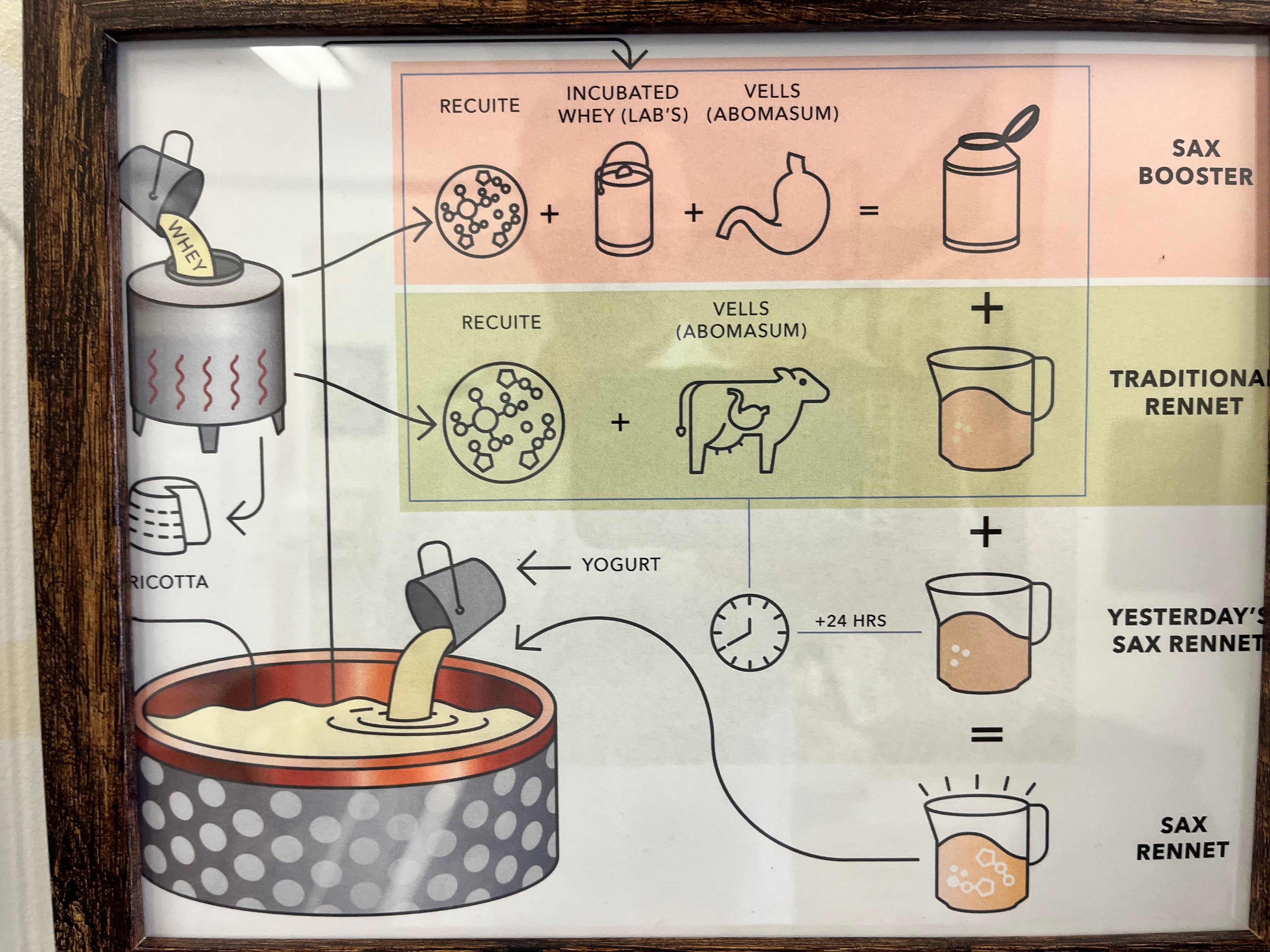
Step towards reclaiming rennet making
There are several hurdles to this method being adopted by other cheesemakers. First, incubation equipment must be obtained. Second ricotta must be added to the daily process of cheesing, along with the steps of preparing and monitoring the acidity of the rennet. The largest hurdle is in obtaining the dried vells. Since commercial rennet production in the US is non-existent, the vells must be imported. Luckily, the ground work for this importation is being laid by Jasper Hill, along with the precedent of turning the vells into liquid rennet/starter as outlined above, incorporating it into a process compliant with food safety regulations. After working with a source from Italy, Jasper Hill has recently began bringing vells in from a French company called Laboratoires ABIA (Berthelot) that works with the abomasa of French calves, rather than importing them from New Zealand and Australia as rennet producers typically do. Berthelot rennets are available in the US via the Canadian cheese supply company Glengarry.
I know the increased cost of animal rennet is a burden on cheesemakers, and it is projected to continue increasing. I also see this as an opportunity, as the necessity that may be the mother of invention. It is likely much cheaper to start from dried vells and make rennet in-house than it is to continue importing it. As I dream of the possibility of cheesemakers having access to rennet made from US born, ethically raised and slaughtered calves, lambs, and kids, I see the methods discussed here as a first step in that direction.
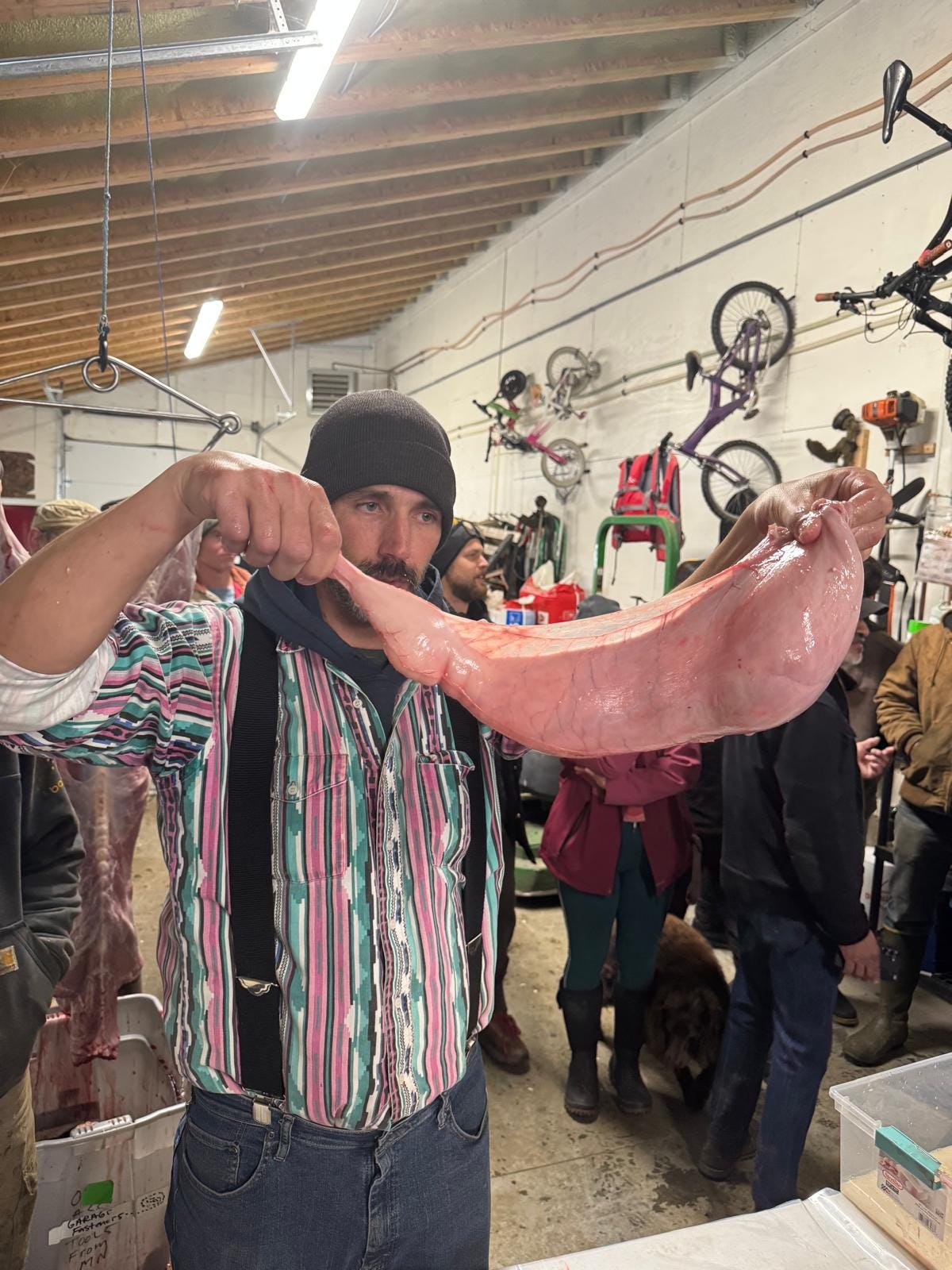
The intersection of meat and milk
My contribution during this week at Jasper Hill was to demonstrate the removal of the abomasum from a calf, explain its digestive tract, and make explicit the connection between cheesemaking and ruminant biology. This was a heavy event that put the ethical dilemmas of consuming dairy front and center, a visceral display of the sacrifice that milk consumption and cheesemaking are built upon, the grief that is a main ingredient of living and eating on this planet. The calf abomasum was full of hunks of perfect cheese, with no plant matter or debris, pieces of scamorza-like cheese floating in whey and stomach juices.
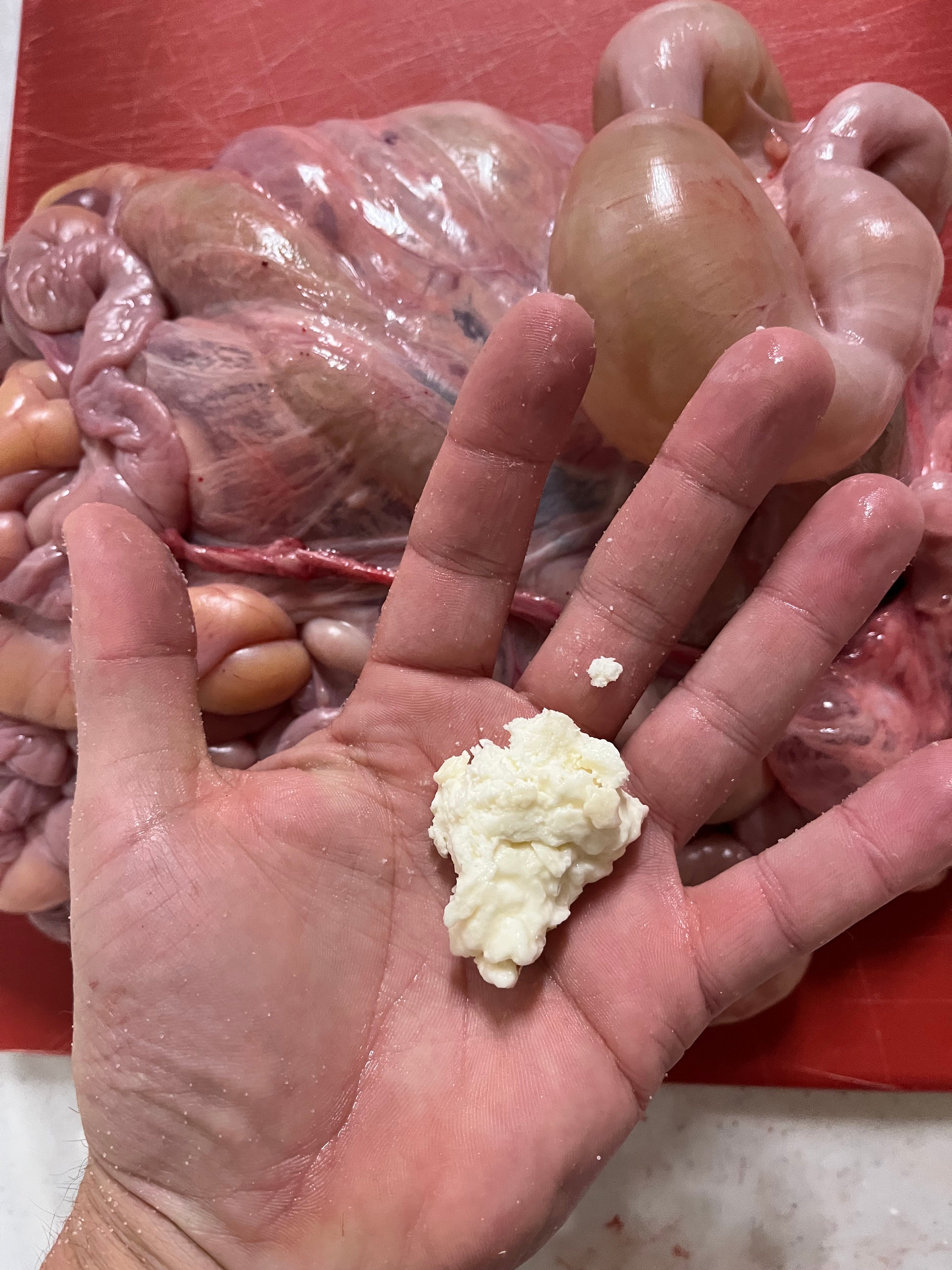
The line between meat and milk is a blurry one, and seeing where this original cheese comes from is a valuable experience that I hope to offer to many people, in future rennet making workshops and Sour Milk School events. This is not done for shock value or morbid curiosity, but with a degree of solemnity that tends to compost into something enriching, almost celebratory. I do these demonstrations so that the web that connects cheese to cycles of ruminant reproduction, microbes, landscapes, and death may be exposed, helping us remember that the blessing of living has a cost, helping us face up to the continual sacrifice that is required to stay alive.
Amazing!! Thanks to your work, I have been butchering goat kids at 7-10 days old for the past couple years and making my own rennet. I've never purchased it! You're doing incredible research, and it has definitely shaped me as a farmer and will hopefully impact my children and local community as I share what I learn from you and using these practices.
I applaud your work in showing people that we are all alive at the expense of something else. The opposite of 'life' is 'entropy ' not 'death'.